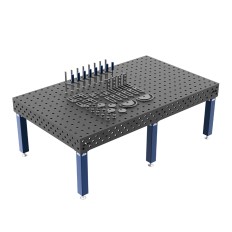
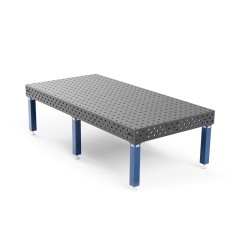
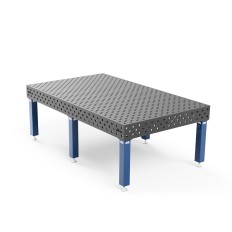
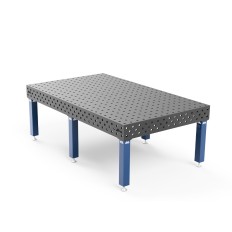
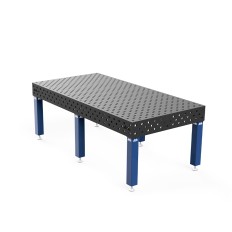
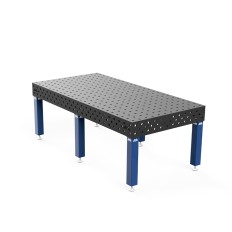
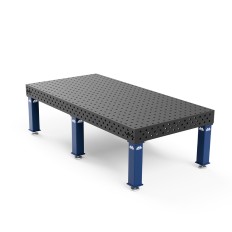
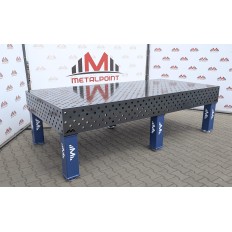
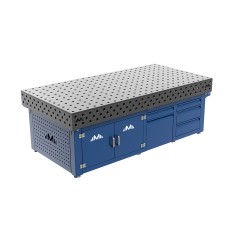
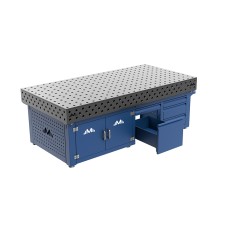
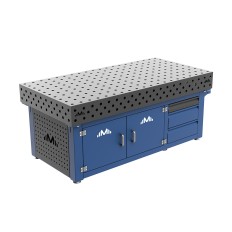
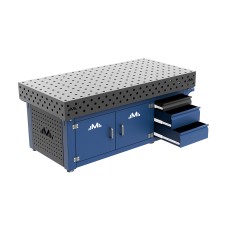
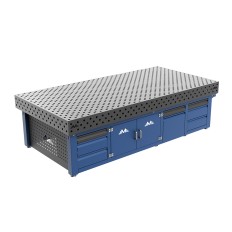
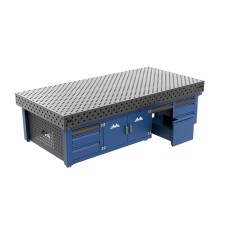
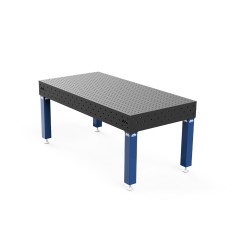
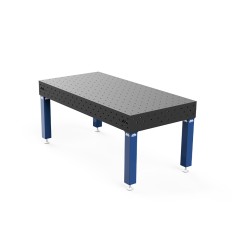
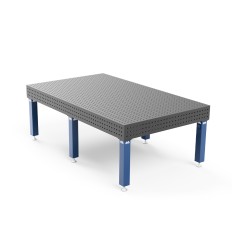
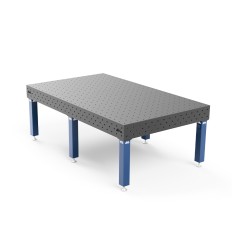
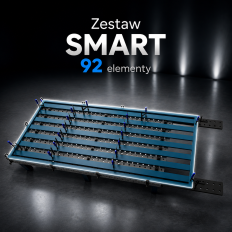
Welding table 3000x1500 mm System 28 - nitrided top 25 mm
The 3000x1500 mm welding table in the 28 mm system was designed for companies expecting maximum precision, high load capacity and long service life. This solution is intended for the construction of steel structures, mass production, welding of large-sized elements and wherever perfect repeatability of workmanship is required.
A large working surface allows for comfortable positioning of even very large details without the need to use additional assembly stations. Thanks to the extensive internal structure, the table remains exceptionally stiff even when working with heavy elements.
Nitrided welding tabletop with increased resistance
The working surface is made of Q355 structural steel and subjected to the plasma nitriding process. This finish significantly increases resistance to abrasion, welding spatter and mechanical damage occurring during everyday use.
Unlike standard welding tables, the surface retains its properties for many years of intensive work. Thanks to the high hardness of the material, the risk of dents and damage is significantly reduced, which translates into maintaining the accuracy of the workstation.
System 28 welding table with milled holes
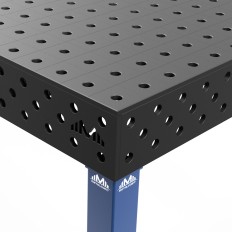
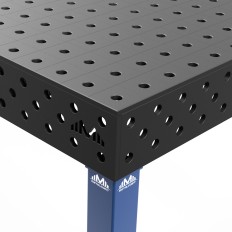
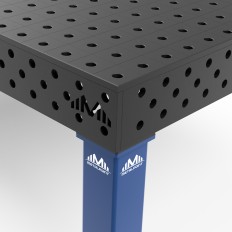
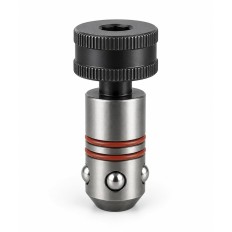
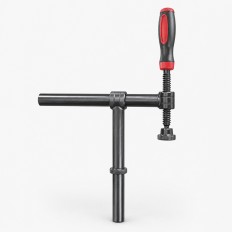
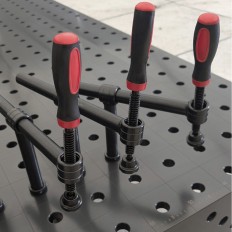
A system of 28 mm holes arranged in a 100x100 mm grid ensures full compatibility with professional welding accessories. Clamps, angles, stops and other positioning elements can be quickly mounted anywhere on the table.
Each hole has been machined and chamfered, which improves the accuracy of mounting accessories and increases the comfort of everyday work. The milled measurement grid allows for quick positioning of elements without the need to use additional measuring devices.
Stress relief annealing and gantry milling
The production process does not end with welding the structure. After the body is made, the table undergoes a stress-relieving annealing process to eliminate stresses arising during production.
Then each surface is machined on a gantry milling machine. Both working planes, holes and the engraved measuring grid are subject to processing.Thanks to this, very high precision of workmanship and extremely small flatness tolerance on the entire table surface is achieved.
High load capacity and stable structure
The massive structure of the table was designed to work under heavy loads. Internal reinforcing ribs and a stable leg system ensure adequate support of the entire work surface even when assembling heavy steel structures.
This solution will be particularly appreciated by companies producing frames, trailers, industrial machines, building structures and other elements requiring high positioning accuracy.
Differences between standard models
Unlike standard welding tables available on the market, this model combines a large working surface, 28 mm system, nitrided surface and precise mechanical machining performed after the material annealing process. Thanks to this, the user receives not only a welding table, but a complete workstation guaranteeing high accuracy, repeatability and long-term durability.
This is a solution for professionals who expect the highest quality of workmanship and do not want to compromise on precision and durability.
FAQ – Frequently asked questions
Why is the flatness tolerance of a tabletop so important?
The flatness of the tabletop directly affects the accuracy of assembly and welding of the structure. The smaller the surface deviations, the easier it is to maintain the dimensions of the finished element and obtain repeatable results during production.
Does the thickness of the tabletop affect the accuracy and durability of the welding table?
Yes. A thicker tabletop ensures greater structural stiffness and better resistance to deformations occurring during welding of heavy elements. Combined with a properly designed system of reinforcing ribs, it allows you to maintain high work accuracy even under heavy loads and intensive use.
What are the benefits of plasma nitriding a countertop?
The nitriding process increases surface hardness and resistance to abrasion and mechanical damage. It also limits the adhesion of welding spatter, which makes it easier to keep the table clean and extends its service life.
Why does the table go through the stress relief annealing process?
When welding structures, internal stresses arise, which may cause deformation of the material. Stress relief annealing eliminates these stresses prior to machining, allowing the table to maintain dimensional stability for many years of use.
How does the table structure affect its load-bearing capacity?
The high load-bearing capacity is due not only to the thickness of the table top, but also to the properly designed system of reinforcing ribs and the rigid structure of the body. Thanks to this, the loads are evenly distributed over the entire working surface, which minimizes the risk of deflection even when working with very heavy details.