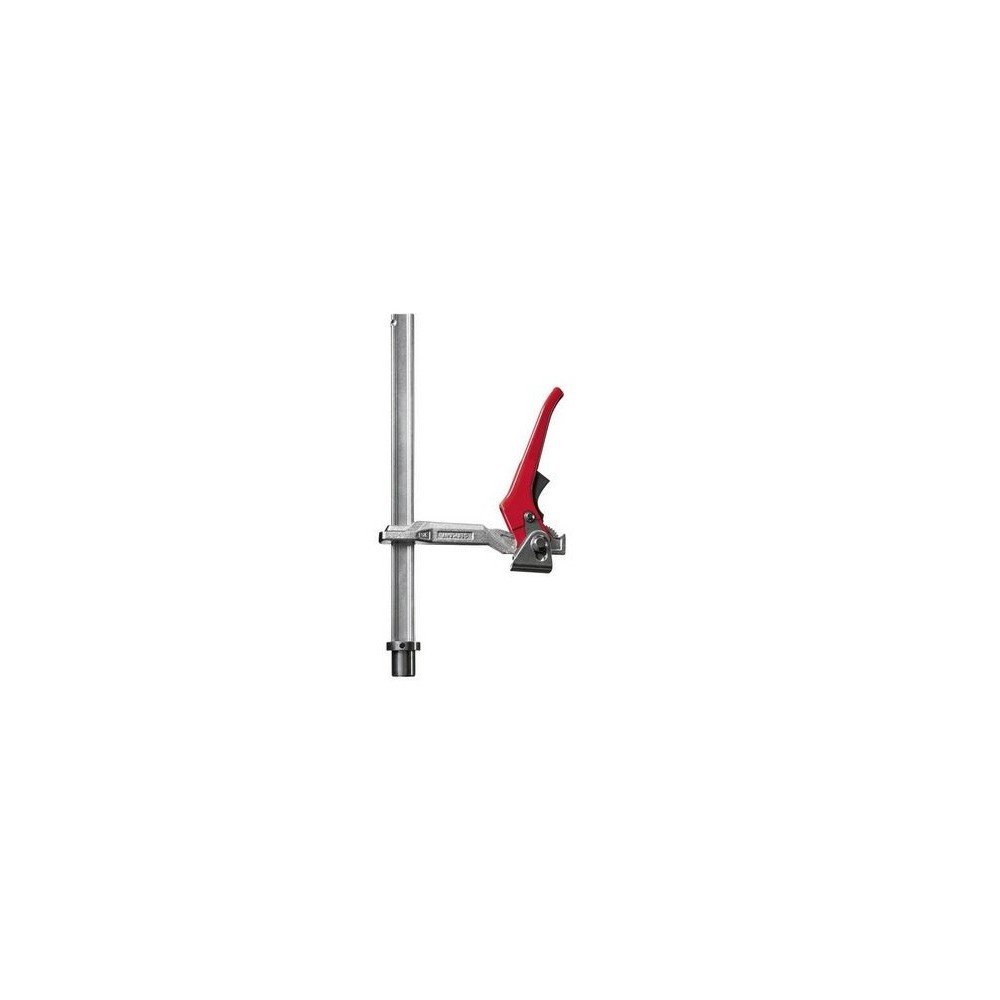
Ratchet Clamp 300 mm – Fast Clamping in a 28 System Grid
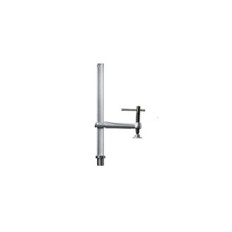
The ratchet clamp accelerates setup of workpieces on a system 28 table wherever speed and repeatability are essential. The step-by-step ratchet mechanism closes the gap “tooth by tooth” without risk of backslip, while the 300 mm length provides a convenient working range for both smaller parts and longer profiles. With secure clamping, you can focus on weld quality instead of constantly checking whether the part is shifting during heating.
How the Ratchet Mechanism Works in Practice
After inserting into the hole grid, position the clamp arm along the target line and tighten the material with wrist movements. The ratchet locks movement in one direction only, so each “click” increases the clamping force without loosening. This design is particularly useful for interrupted tasks: you can quickly release the part for correction and just as quickly return to the previous clamping force—without tedious screw adjustments.
Geometry Control and Repeatability
The rigid clamp arm, combined with stops and limiters on the table, creates a stable reference system. When the workpiece expands under heat, the ratchet prevents the clamp from loosening, reducing micro-movements and improving edge linearity. In series production, repeatable clamping force and fixed hole positions significantly shorten preparation time for subsequent assemblies.
Ergonomics and Safety
The ratchet clamp is intuitive to use, even with gloves. The movement is short and repeatable, and the locking moment is easy to feel with the characteristic “click.” Releasing the clamp is controlled—one motion disengages the ratchet, allowing repositioning and immediate re-clamping. This reduces fatigue and minimizes the risk of sudden “kickback” common in poorly loosened screw clamps.
Typical Use Cases
Most commonly used for assembling frames, aligning long profiles before continuous welding, and in tasks where elements are frequently moved between stations. The ratchet mechanism is also valuable for tack welding—small adjustments and quick “re-clamps” help maintain geometry without nervous screw turning.
Immediate Benefits
- Faster clamping and corrections than traditional screw clamps,
- Stable grip without backslip under heating,
- Repeatable positioning in the 28 mm system grid.
Station Setup Tips
Position the clamp so the force acts toward the stop—the limiter defines the base, while the ratchet pulls the part against the plane. For long profiles, distribute several clamping points along the edge to prevent misalignment. If the element has varying stiffness (e.g., welded reinforcements), clamp closer to the section changes to prevent twisting and “waviness” during welding.
Maintenance and Durability
Regularly remove chips from the ratchet teeth and joints. Apply a light layer of anti-spatter spray in areas exposed to arc spatter to ease cleaning. Periodically check for play on the arm pivot and the ratchet spring to maintain smooth operation and full clamping strength.
FAQ – Frequently Asked Questions
How does a ratchet clamp differ from a screw clamp?
The ratchet works step-by-step and blocks reverse movement, so you can clamp faster and maintain pressure without backslip; screw clamps require full turns of the knob.
Is it compatible with all system 28 tables?
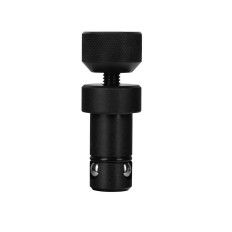
Yes, it is designed for 28 mm hole grids and works with standard pins and stops.
Is it suitable for heavier structures?
Yes, provided clamping points are properly distributed and stops are used to absorb lateral forces.
Can it be operated with one hand?
In most operations yes—the ratchet mechanism allows clamping with short wrist movements, and release is done with a single lever or button.
How to maintain the ratchet mechanism?
Keep teeth and joints free of chips, periodically check the spring and pivot play, and lightly lubricate moving points if necessary.


 English
 Polski
 Français
 Slovak
 Nederlands